Chickenpox in Children First Aid

How-To
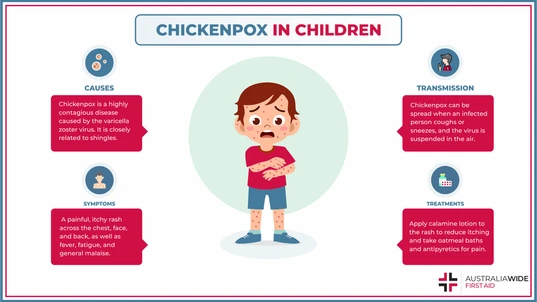
Chickenpox is a viral infection that most commonly affects children. Its most recognisable feature is a raised, red rash, though it can also progress into more severe symptoms like pneumonia. As such, it is important to know how to reduce the risk of infection.
Chickenpox is a disease caused by the varicella zoster virus. It is best prevented by vaccination and if left untreated can lead to serious illness. Chickenpox is a highly contagious viral disease that can affect both children and adults. Although it is more prevalent in children, the effects are often more severe in adult populations. After recovering from chickenpox, the virus remains in your body in an inactive form. Sometimes the virus reactivates later in life and is known as shingles or herpes zoster. Symptoms of chickenpox are easy to identify and very uncomfortable for the infected person. Fortunately, vaccination is a highly effective method for the prevention of illness and reduction of symptoms.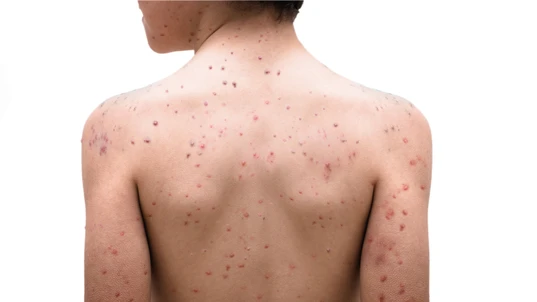
Chickenpox rash prior to blister formation
Symptoms of Chickenpox
The most recognisable symptom of an infection with the chickenpox virus is the characteristic red rash. It usually develops first across the chest, face, and back before spreading across the body. The rash is characterised by papules (or raised skin tissue) followed by vesicles (or blisters). While the severity will vary between individuals, there are an average of 500 papules or vesicles per person. Symptoms generally last 1 week. Symptoms include:- Painful, itchy rash
- Fever
- Fatigue
- General malaise
- Bacterial superinfections of the skin
- Encephalitis
- Pneumonia
- Hepatitis
Transmission of Chickenpox
Chickenpox is primarily transmitted in two ways:- Droplet transmission: when an infected person coughs or sneezes and an individual encounters the virus suspended in the droplet particles
- Direct contact: when an individual encounters the fluid from an infected person’s blisters

Woman applies a lotion to affected skin to treat pain and itching from chickenpox rash
Treatment and First Aid
Treatment for chickenpox in healthy children is primarily symptom relief. Although there are available antiviral medications on the market, they are typically used for adults with more severe symptoms or immunocompromised individuals. It is important that treatment with antiviral medications begin as soon as possible after the identification of chickenpox. Depending on the severity, antiviral medications can be administered orally or intravenously. Common treatments for symptoms include:- Lukewarm baths, with the optional addition of oatmeal or baking soda
- Calamine lotion, or similar lotions, applied to the rash to reduce the severity of itching and pain
- Antipyretics, or fever-reducing agents, such as paracetamol or acetaminophen for fever and pain relief
Prevention of Chickenpox
Historically, an infection with chickenpox virus was associated with a high degree of mortality, particularly in the very young and the very old. The introduction of antiviral medications in the treatment of immunosuppressed and the very ill has significantly reduced the number of deaths from chickenpox virus. Routine administration of antiviral medications in healthy children is not generally recommended. Another medical model of prevention of chickenpox is vaccination. The introduction and widespread use of the chickenpox vaccine has reduced the incidence and severity of illness. While the vaccine can be administered in one and two-dose series during childhood, it can also be administered within 3 days of exposure to the virus. Even then, it reduces the rate of infection and severity of illness. Therefore, vaccine administration is helpful as a preventative and reactive measure against chickenpox.Resources
For more information on first aid and infection control measures, visit the Australia Wide First Aid article library. You may also be interested in our CPR and First Aid coursesSources:
- Kennedy PGE, Gershon AA. Clinical Features of Varicella-Zoster Virus Infection. Viruses. 2018 Nov 2;10(11):609. doi: 10.3390/v10110609. PMID: 30400213; PMCID: PMC6266119. https://pubmed.ncbi.nlm.nih.gov/30400213/
- https://www.health.gov.au/diseases/chickenpox-varicella-zoster
- Macartney K, Heywood A, McIntyre P. Vaccines for post-exposure prophylaxis against varicella (chickenpox) in children and adults. Cochrane Database Syst Rev. 2014 Jun 23;2014(6):CD001833. doi: 10.1002/14651858.CD001833.pub3. PMID: 24954057; PMCID: PMC7061782. https://pubmed.ncbi.nlm.nih.gov/24954057/
Originally published at
https://www.australiawidefirstaid.com.au/resources/first-aid-chickenpox-in-children
as part of the Australia Wide First Aid Articles Library
Related Articles
First Aid for Choking
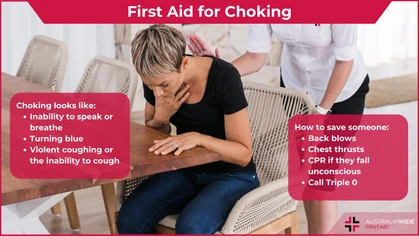
Choking occurs when an object or a piece of food becomes lodged in the throat, blocking the airway. The adult or child will have difficulty breathing, and may lose consciousness. Quick and effective action is essential to prevent severe consequences and death.
Fluid Draining from an Ear
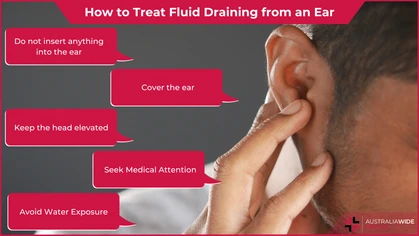
Knowing how to provide first aid for fluid draining from an ear is crucial to alleviate discomfort and potentially prevent complications.
First Aid for Nose Bleeds
This article covers treatment/first aid for nose bleeds, and also covers all of the common misconceptions and myths about treating a bleeding nose.

Relieving Shin Splints
Learn about Shin Splints Diagnosis and Treatment and Preventative Tips for this common injury that affects runners and athletes. Discover how to relieve pain and discomfort in the lower leg and prevent future episodes. Consult a healthcare professional for proper diagnosis and treatment options.
First Aid for Hypoglycaemia
Hypoglycaemia or low blood sugar, is a dramatic imbalance where the tissues, especially the brain cells, become starved of essential blood sugar. This can lead to the casualty becoming unconscious and death may follow within hours.
First Aid for Angina
Angina is a tightness, pressure or discomfort in the chest caused by a lack of blood and oxygen to the heart muscle. Angina does not damage the heart muscle, but can be a warning sign for heart attack.
First Aid for Dusky Flathead Sting
The Dusky Flathead is the largest flathead species in Australia. It is common in rocky reefs and shallow muddy areas along the Australian east coast. They have venomous spines along their body that can cause severe pain and possible infection.
First Aid for Hyperventilation
Hyperventilation is an emotional response to stress, anxiety or fear that quickens breathing. Hyperventilation depletes the carbon dioxide in the body and reduces the supply of oxygen to vital organs and can lead to blurred vision, hand and finger spasms, and even collapse.
First Aid for Crush Injury
A crush injury can result from any object that exerts applied and continual force on the body. Without immediate first aid and medical attention, a crush injury can lead to heart, lung, and kidney failure.
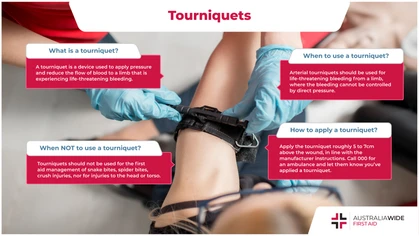
Tourniquets | First Aid How-To
A tourniquet is a device used to apply pressure and reduce the flow of blood to a limb that is experiencing life-threatening bleeding. When applied correctly, tourniquets can increase the rate of survival to 90%.