Profile on the Little Whip Snake

Bites and Stings
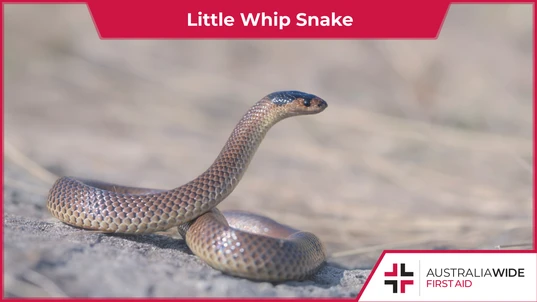
The Little whip snake is found across south-eastern Australia. As well as belonging to the Elapidae family of venomous snakes, they are often mistaken for juvenile Brown snakes.
The Little whip snake is one of the smallest members of the Elapidae family of snakes, of which Red bellied black snakes and Death adders are also members. They have a wide distribution across south-eastern Australia, including the outer suburbs of Melbourne and Adelaide. To help you avoid a run-in with these pint-sized reptiles, let's look at their characteristics and preferred habitat. We also cover snake bites in our general and childcare first aid courses. We have training locations in every state, capital city, and major town throughout Australia. Head to our website to find and enrol in a first aid course near you today.Appearance
- A small, slender body that can reach up to 50 cm
- A black, hourglass-shaped patch that reaches from the back of the nape to between the eyes
- The scales on their back and sides can range from a tan to orangey colour and have a dark edge - the scales on their belly, meanwhile, are usually cream
Habitat
The Little whip snake (Parasuta flagellum or Suta flagellum) is distributed across south-eastern mainland Australia, from south west Victoria to south east New South Wales. Their preferred habitat includes:- Eucalypt woodlands
- Grasslands
- Stony hills
Habits
The Little whip snake is a carnivore and primarily feeds on small lizards and frogs. Females are ovoviviparous and give birth to litters of roughly seven live young between September and February.Danger
When confronted with a threat, Little whip snakes have been known to hurl their body about in a whip-like fashion and emit a foul odour. And though they are venomous, their small size and venom dosage means that their bites generally only cause mild discomfort.First aid
In saying that, it can be difficult to positively identify different types of snakes, as individuals of the same species can vary dramatically in colour, pattern, and size. As such, all snake bites should be treated as a medical emergency. If you or someone else is bitten by a snake, call Triple Zero (000) for emergency services and apply a pressure bandage as part of the Pressure Immobilisation Technique. Snake bites rarely cause fatalities due to the effectiveness of modern anti-venoms. Likewise, snakes will never go out of their way to attack you. In fact, most bites occur when a person attempts to approach, capture, or kill a snake. As such, to reduce your risk of a snake bite - leave them alone. If you need a snake relocated from your home, contact a professional snake catcher, instead.Final thoughts
To get hands-on experience in treating snake bites, head to one of our general or childcare first aid courses. We have training locations in every state, capital city, and major town throughout Australia. Head to our website to find and enrol in a first aid course near you today.
Originally published at
https://www.australiawidefirstaid.com.au/resources/little-whip-snake
as part of the Australia Wide First Aid Articles Library
Related Articles

The Common Spiders of Darwin
Darwin, the tropical capital of Australia’s Northern Territory, is home to a rich diversity of wildlife - including an impressive array of spiders. From the sprawling webs of golden orb-weavers to the cryptic camouflage of trapdoor spiders, these arachnids play a vital role in the local ecosystem. While some may inspire fear, the majority are harmless and even beneficial, helping to control insect populations.
First Aid for a Cat Bite
Cat bites, while often underestimated, can lead to serious health complications if not treated promptly and properly. Cats' mouths harbour a variety of bacteria that can cause infections in humans.
First Aid for Drop Bear Attacks
Encounters with wildlife can often be thrilling, but when it comes to the creature known as the drop bear, the experience can quickly turn dangerous. A sharp increase in recent attacks prompts the need for understanding proper first aid procedures in case of an attack.
First Aid for Funnel Web Spider Bites
Encountering a funnel web spider can be a frightening experience, and if a bite occurs, it is crucial to act swiftly and effectively to minimize the potential risks associated with their venom.
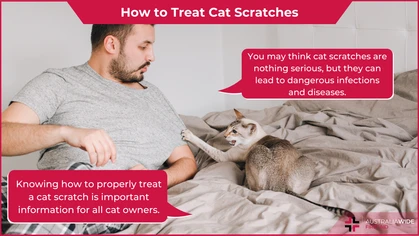
How to Treat Cat Scratches
Cats are beloved pets for millions of people worldwide, but sometimes even the most gentle feline can become agitated or scared, leading to scratches. While cat scratches are usually not serious, they can still be painful and carry the risk of infection.
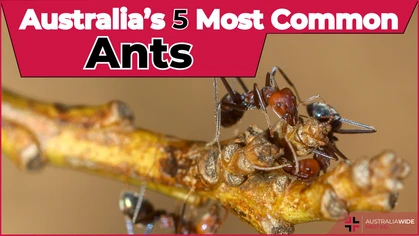
5 Most Common Ants in Australia
Australia is home to a remarkably diverse array of ant species, showcasing a fascinating range of characteristics and behaviours. By understanding the identification, range, and behaviours of these ants, individuals can navigate their surroundings with greater awareness and appreciation.
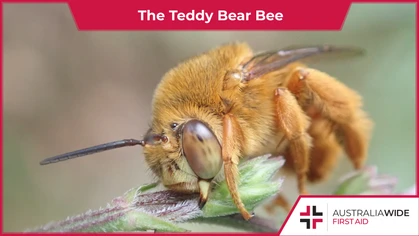
5 Most Common Bees in Australia
Recognizing the significance of bees' positive impact, it becomes imperative to acquaint ourselves with the various species, distinguishing characteristics, geographical distributions, stinging tendencies, and suitable first aid measures for bee stings.
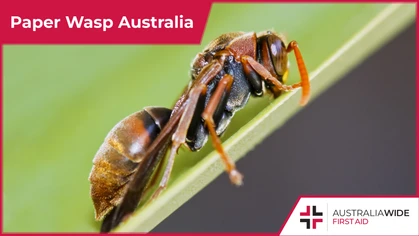
5 Common Wasps in Australia
Australia is home to a diverse range of insect species, including several types of wasps. While some wasps are beneficial as predators of other pests, others can pose a threat due to their stinging capabilities.
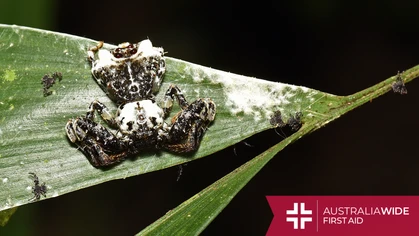
The Bird Dropping Spider: A Master of Mimicry
As their name suggests, the Bird Dropping Spider has developed colorations and patterns that mimic bird poo. This ingenious disguise means they can thrive in a wide variety of habitats, including suburban gardens.
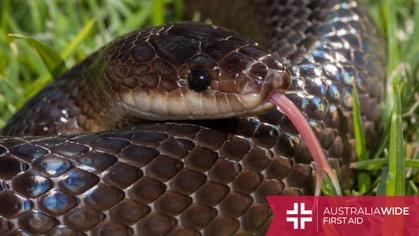
The Slaty Grey Snake | Snake Facts
One of the most common snake species in Darwin and Australia's Top End region, the Slaty grey snake is a medium-sized species with shiny scales. They have been known to defend themselves aggressively when disturbed.