Snake Facts: The Australian Copperhead Snake

Bites and Stings
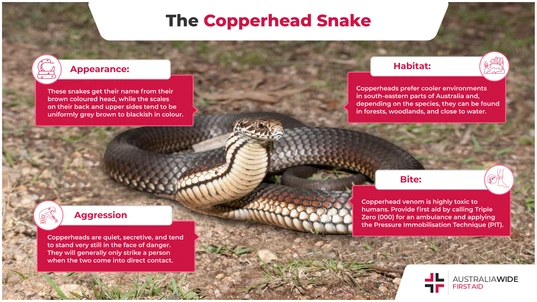
So named because of their brown-coloured head, Copperhead snakes are found across south-eastern Australia. Their venom is toxic to a host of different cells in the human body and must be treated with effective first aid and professional help. (Pictured: Highland copperhead)
Unlike most Australian snake species, Copperheads can thrive in some of the country's coldest and wettest regions. There are 3 known species of Copperheads:- The Pygmy copperhead
- The Lowland copperhead
- The Highland copperhead
Appearance
All three species of Copperhead snakes have similar identifying characteristics:- Moderately robust and muscular body
- Semi-glossy scales on their back and upper sides that are uniformly blackish to grey brown - some Lowland and Highland copperheads also have a brownish or orange flush
- The lowermost scales on their sides are usually larger and paler than the rest of their scales
- The scales on their belly can range from cream to grey
- Their head is relatively narrow and indistinct from their neck
- The scales bordering their upper lip are 'barred' with white on the anterior edge
- As their name suggests, their head has a coppery-brown colouration
- Pygmy copperhead - 84 cm
- Lowland copperhead - 145 cm
- Highlands copperhead - 115 cm
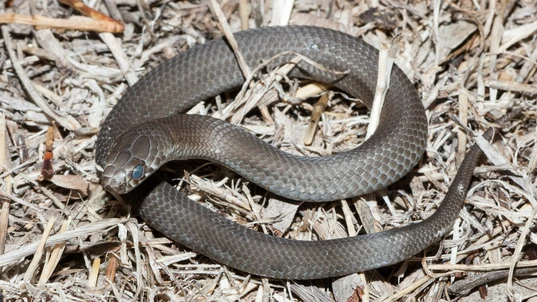
The Pygmy copperhead
Habitat and Distribution
All three species of Copperhead snakes are generally restricted to colder environments in south-eastern parts of Australia:Pygmy copperhead
The Pygmy copperhead snake (Austrelaps labialis) is only found east of Adelaide in the Mount Lofty Ranges and on Kangaroo Island. In the Mount Lofty Ranges, they generally only inhabit high altitude forest. On Kangaroo Island, however, they can be encountered in a wide range of habitats, including:- Coastal dunes
- Open grassland
- Agricultural areas
Lowland copperhead
The Lowlands copperhead (Austrelaps superbus) can be found in lowland areas of south-eastern South Australia, southern Victoria, Tasmania, and the islands of Bass Strait. They are often encountered in close proximity to marshes, creeks, streams, and other water sources in grasslands, heathland, woodlands, and open scrub. They can also thrive in heavily disturbed areas, where they occur near dams, canals, and along the verges of roads. Lowland copperheads tend to shelter in or under:- Boulders
- Logs
- Dense vegetation
- Sheets of roofing iron
- Yabbie burrows, muttonbird burrows, and disused animal burrows
Highland copperhead
The Highland copperhead snake (Austrelaps ramsayi) can be found in the highlands of New South Wales and eastern Victoria. Here, they occur in woodland and open forest, as well as disturbed areas that have been cleared for grazing and other agriculture. Like their Lowland counterpart, Highland copperheads usually shelter near water sources in or under:- Fallen timber
- Matted vegetation
- Abandoned burrows
Behaviours
Copperhead snakes tend to feed on cold-blooded prey like insects, frogs, lizards, and other snakes. They are mostly active during the day and on the ground, though they will occasionally climb to bask in sunlight. Male Copperheads engage in combat upon the start of the breeding season, during which they intertwine their bodies.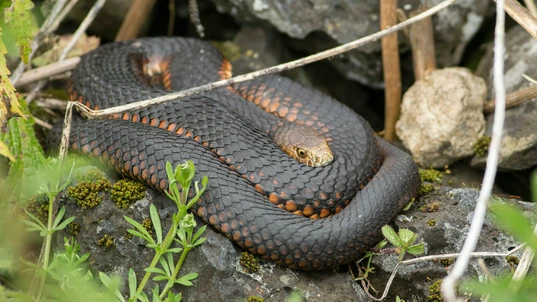
The Lowland copperhead
Danger
Copperhead snakes are generally secretive and prefer to avoid humans. If cornered, they will usually not bite in the first instance, but will instead hiss loudly, flatten their body, and thrash about. Further provocation, however, could cause them to lash out and bite. Their venom is highly toxic to nerve cells, red blood cells, and other living cells, and so their bites should be treated as a medical emergency:- In line with the DRSABCD action plan, call Triple Zero (000) for an ambulance and be prepared to perform CPR
- Reassure the casualty, keep them under constant observation, and make sure they remain as still as possible
- Apply the Pressure Immobilisation Technique
- Immobilise the limb and joints with a splint until the ambulance arrives - use a sling for a bite to the arm
Final Thoughts
For hands-on experience with identifying, treating, and preventing bites from Australian copperheads and other snakes, enrol in one of our general or childcare first aid courses. We have training locations in every state, capital city, and major town throughout Australia. Head to our website to find and enrol at a training location near you today.
Originally published at
https://www.australiawidefirstaid.com.au/resources/australian-copperhead-snake
as part of the Australia Wide First Aid Articles Library
Related Articles

The Common Spiders of Darwin
Darwin, the tropical capital of Australia’s Northern Territory, is home to a rich diversity of wildlife - including an impressive array of spiders. From the sprawling webs of golden orb-weavers to the cryptic camouflage of trapdoor spiders, these arachnids play a vital role in the local ecosystem. While some may inspire fear, the majority are harmless and even beneficial, helping to control insect populations.
First Aid for a Cat Bite
Cat bites, while often underestimated, can lead to serious health complications if not treated promptly and properly. Cats' mouths harbour a variety of bacteria that can cause infections in humans.
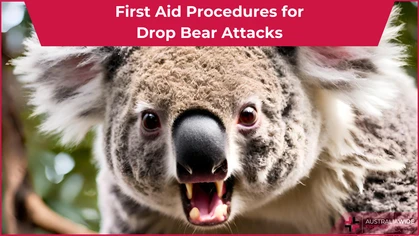
First Aid for Drop Bear Attacks
Encounters with wildlife can often be thrilling, but when it comes to the creature known as the drop bear, the experience can quickly turn dangerous. A sharp increase in recent attacks prompts the need for understanding proper first aid procedures in case of an attack.
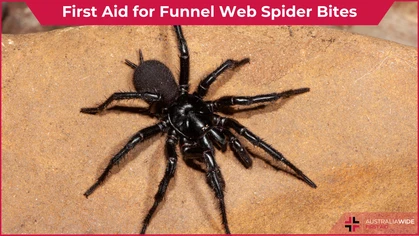
First Aid for Funnel Web Spider Bites
Encountering a funnel web spider can be a frightening experience, and if a bite occurs, it is crucial to act swiftly and effectively to minimize the potential risks associated with their venom.

How to Treat Cat Scratches
Cats are beloved pets for millions of people worldwide, but sometimes even the most gentle feline can become agitated or scared, leading to scratches. While cat scratches are usually not serious, they can still be painful and carry the risk of infection.
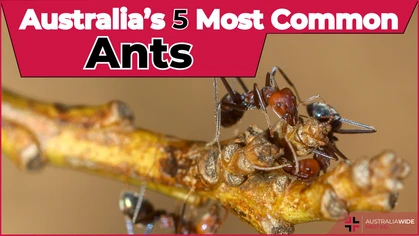
5 Most Common Ants in Australia
Australia is home to a remarkably diverse array of ant species, showcasing a fascinating range of characteristics and behaviours. By understanding the identification, range, and behaviours of these ants, individuals can navigate their surroundings with greater awareness and appreciation.
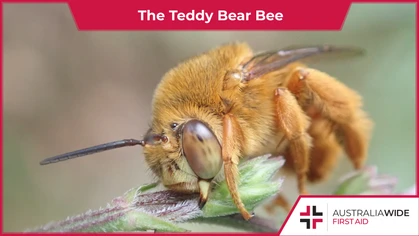
5 Most Common Bees in Australia
Recognizing the significance of bees' positive impact, it becomes imperative to acquaint ourselves with the various species, distinguishing characteristics, geographical distributions, stinging tendencies, and suitable first aid measures for bee stings.
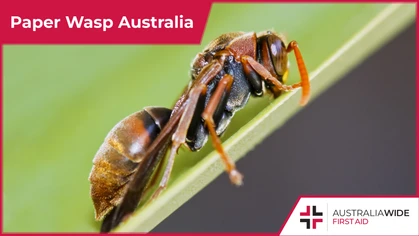
5 Common Wasps in Australia
Australia is home to a diverse range of insect species, including several types of wasps. While some wasps are beneficial as predators of other pests, others can pose a threat due to their stinging capabilities.
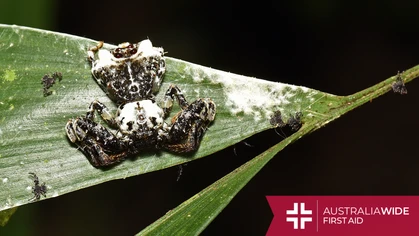
The Bird Dropping Spider: A Master of Mimicry
As their name suggests, the Bird Dropping Spider has developed colorations and patterns that mimic bird poo. This ingenious disguise means they can thrive in a wide variety of habitats, including suburban gardens.
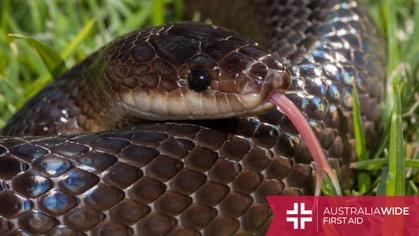
The Slaty Grey Snake | Snake Facts
One of the most common snake species in Darwin and Australia's Top End region, the Slaty grey snake is a medium-sized species with shiny scales. They have been known to defend themselves aggressively when disturbed.